My first dinner in KL was at a place called Bijan bar, a showcase of Malay flavors. Vegetable juliennes stuck together in a chickpea flour batter and fried to crispiness and a Sea Bass cooked to perfection in banana leaves, sitting in a sweet and sour gravy with just the right kick of spices, mixed with okra and other greens, along with nasi goreng, satays. It was a good start.

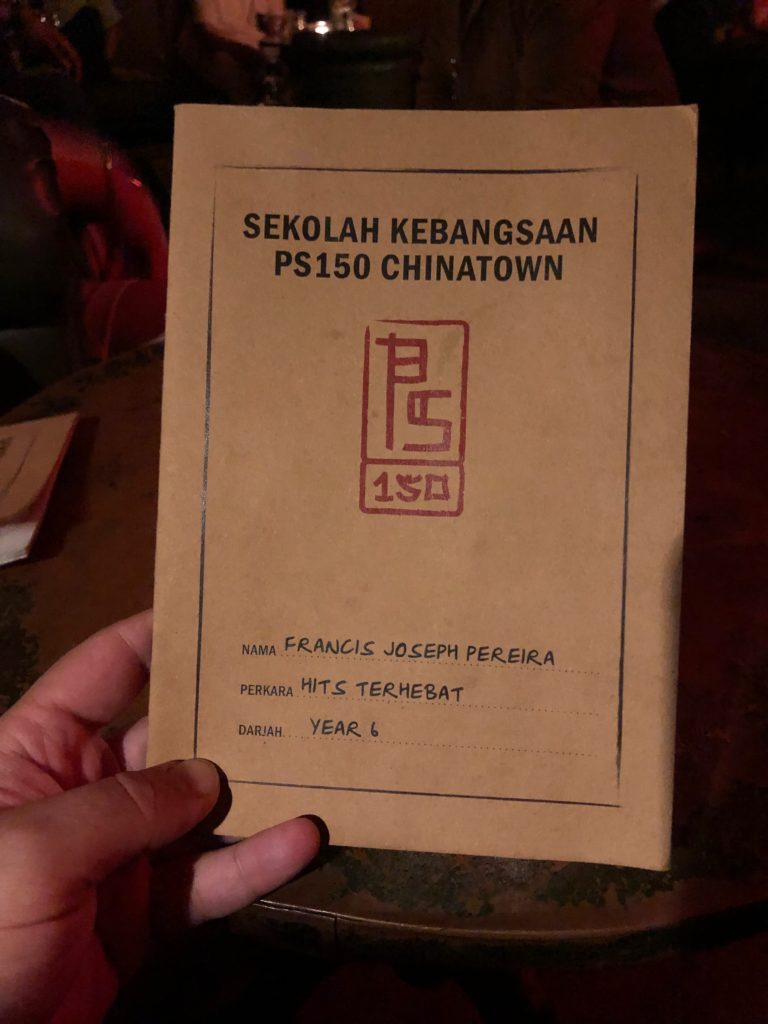
On our way back to the hotel, Ivan drops a tip: “You should check out this bar nearby, you enter through a toy store. It’s a speakeasy.”
In the evening I meet up with John, and we head to Jalan Alor to dive into Kuala Lumpur’s street food scene. We weave through the whole street, dodging the super pushy vendors who leap at you with their offers, cutting into conversations. It’s clear where we’re headed first—the hand-pulled noodle stall.
A thousand-year-old technique of stretching what looks like a baguette into thinner and thinner strands until it becomes fine, delicious, springy noodles. Here, the secret’s an alkaline salt that gives them their elasticity and chewiness. Pair that with some dumplings and their killer sweet and hot sauce.
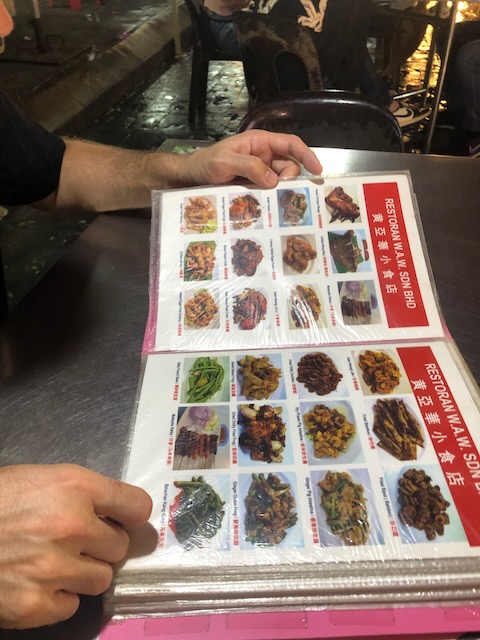
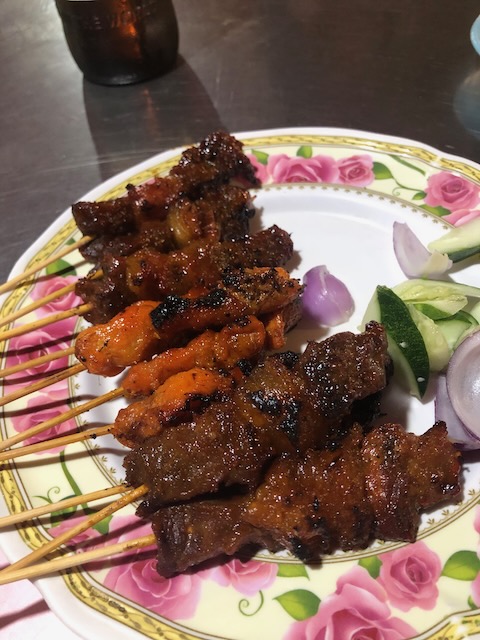

Next stall, we go for frog legs with scallions and ginger in a wok sauce that hints at pork, chicken wings, and a mixed satay plate. The frog legs are memorable, specially the side veggies glazed in that shiny sauce. Someone at yesterday’s event claimed chicken rice is better in Singapore but satays reign supreme in Malaysia. So far, it’s 2-0 to Singapore in my opinion, although I gotta say, everything’s tasty and ridiculously cheap.
“Dessert?” I ask John.
“Let’s give durian a shot. But we’ll go somewhere special,” he says “Ha! Imagine? We wade through the kitchen, and end up in a durian speakeasy.”
“That’d be dope,” I tell him, “bartenders in bow ties and black latex gloves serving up different varieties of durian.”
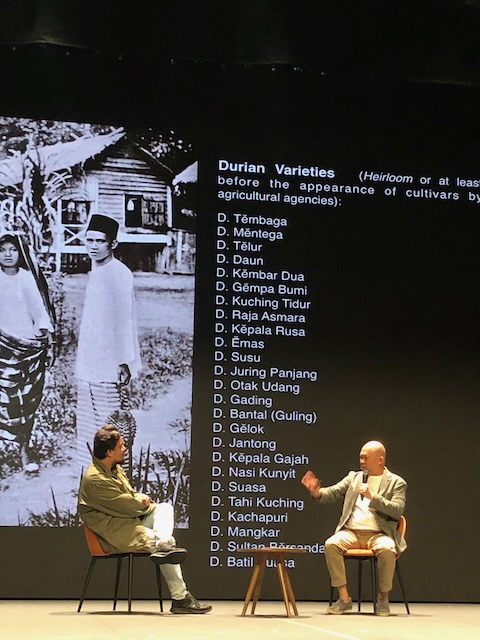
We make it to the stall. Durian’s one of those crazy things every culture has that outsiders just don’t get. French could say the same about blue cheese, Bolivians about chuño. Southeast Asians have durian—a fruit that emits a scent taking over the vicinity around its stall. In Singapore, it’s banned in certain public places, like the subway, for instance. The smell is unbearable. But it’s part of the culture to the extent that it has inspired buildings, like The Esplanade.

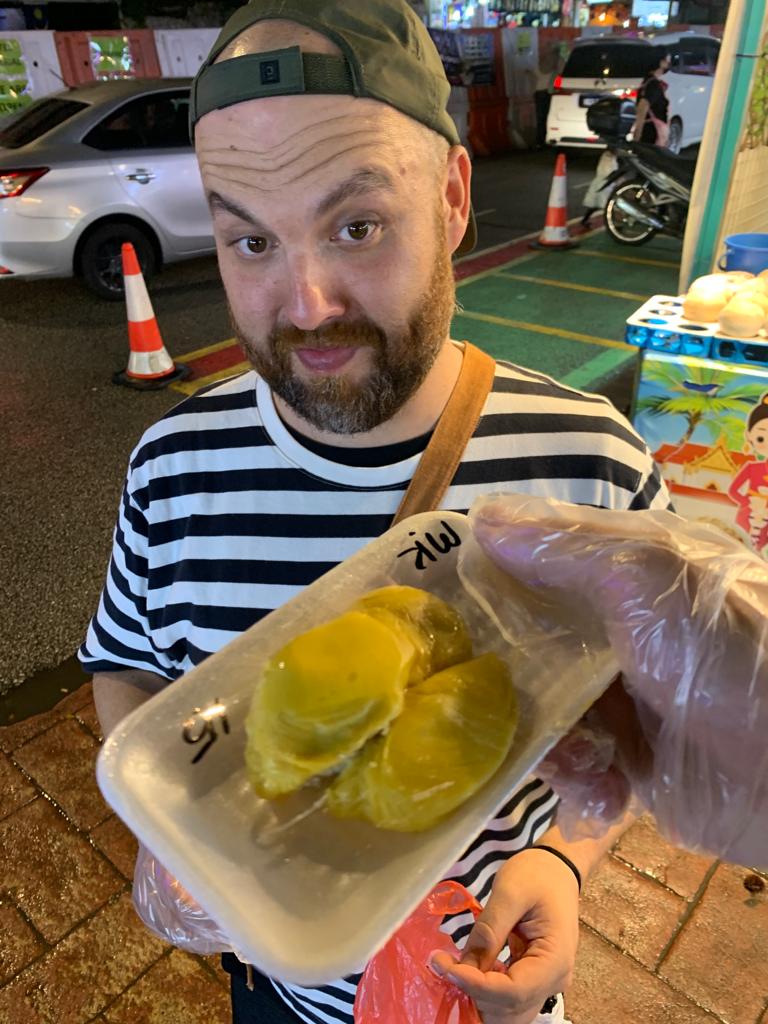

We pick out two varieties of durian—one they say is sweeter, the other stronger. We don gloves to give them a try. John’s face as he shoots a selfie video is priceless, his expression a clear giveaway of his distaste, and after the first bite, his grimace only deepens. Over the next few days, I’d watch that video over and over, cracking up every time.
At the next table, an older Chinese couple is digging into a whole fruit, clearly enjoying each bite of durian in their disposable plastic gloves.
“We gotta go. Now!” John signals. It’s like he’s hit with a sudden, you know, emergency.
“Yeah! I needed a mouthwash of gin or something strong myself. Both Hannes and Ivan mentioned some speakeasies around here, near the hotel,” I said.
I wait for John at the hotel bar, drinking an Uppercut, but the aftertaste of durian clings on—it’s a mix of almost rotten, blue cheese, and gas, all wrapped in a super slimy mango texture. Then we head for the speakeasy. It’s a hunt, but then I spot the abandoned looking toy store.
“Ah, there. That must be the entrance.”
“Oh God. It’s all coming back to me,” says John. “I was here last night with the event speakers.”
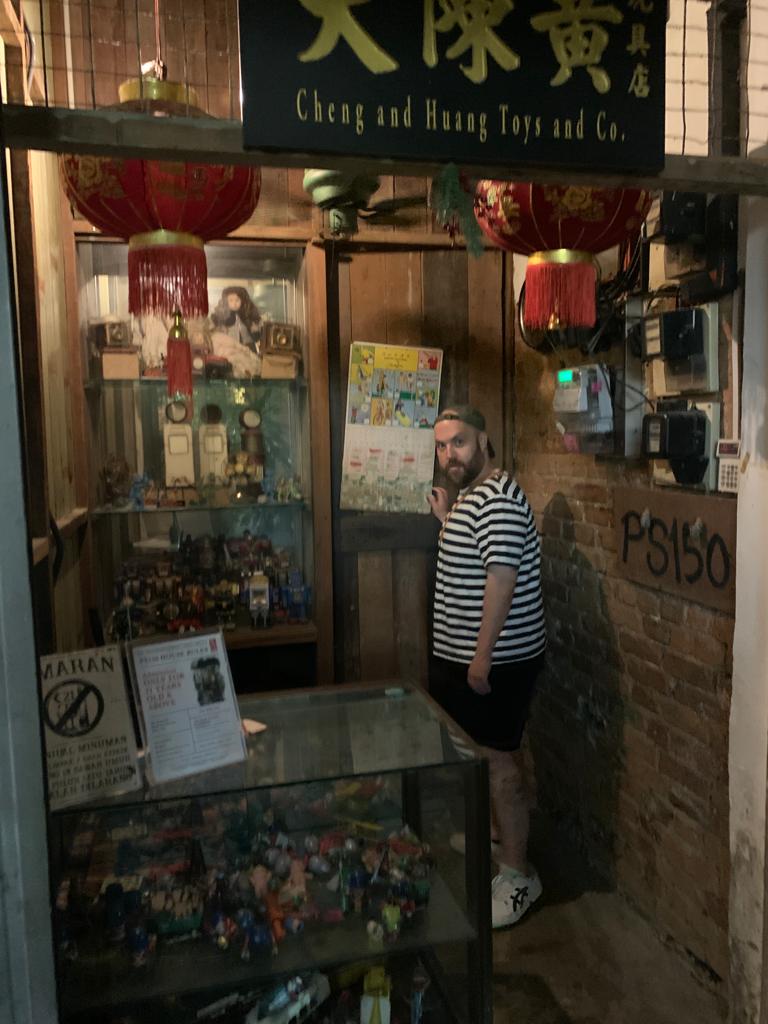
The bar’s entrance has this opium den vibe, little booths with couples tucked away. I order a super nice cocktail with ginger and MSG—the “local flavor” they’d told me about.